
三谷産業、「えのきエキス・だし」提案 うまみとマスキングを両立、水産由来原料の代替にも【PR】
調味料業界では、うまみの最大化と不要な風味のマスキングのバランスが大きな課題となっている。このトレードオフを解決する新たな食品素材を提案しているのが三谷産業だ。同社の国産エノキ茸を原料とした「えのきエキス」「えのき濃縮だし」は、大豆臭や酸臭をマスキングしながらも、エノキ本来のうまみを付与可能。資源枯渇に直面している水産原料とは異なり、安定供給が可能な代替新商材として注目を集めている。5月27日~29日に東京ビッグサイトで開催される「ifia JAPAN(アイフィア・ジャパン)2026」に出展。うまみとマスキングの両立を実際に体感できる試食品を用意している。
「えのきエキス」「えのき濃縮だし」の特徴は、同社の独自製法(特許出願中)により引き出したエノキ茸のかつてないうまみの実現とその持続性。同品には20種類のアミノ酸のうち18種類が含まれることから、グルタミン酸系の先味に始まり、中味から後味までしっかりうまみを持続させることが可能で、具材のない味噌汁であっても複雑味を与えることができる。
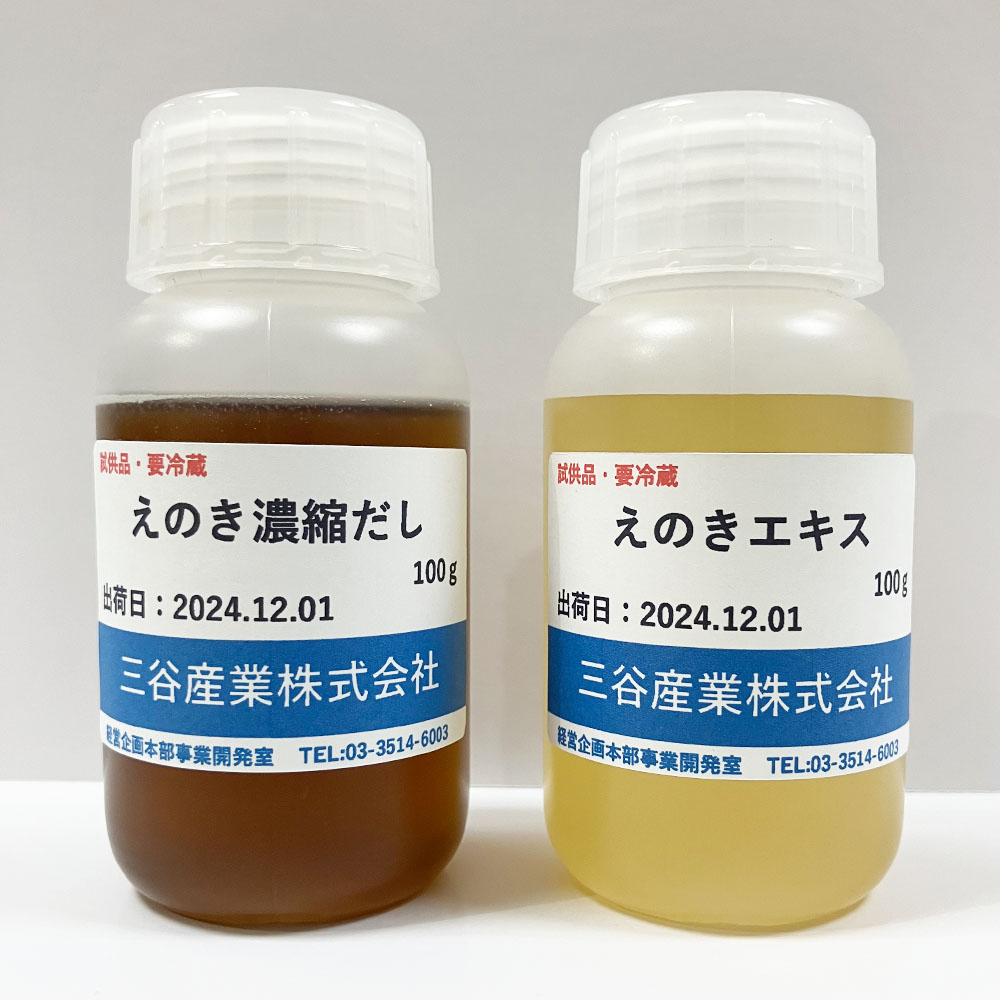
もう一つの特徴は強力なマスキング効果。無調整豆乳に「えのきエキス」を1%添加した場合、試飲を行ったすべての営業訪問先から大豆臭を抑えられているとの感想を得た。既存のマスキング剤だと削りたくない味まで削ってしまう場合があるが、「もともとうまみ付与が目的の商品だったので、マスキングしてもうまみは削れない。例えばカボチャの煮付けに添加するとその渋みが収まるとともに、うまみは変わらず維持される」(経営企画本部事業開発室・斉藤朋之氏)といい、マスキングしながらうまみも同時に付与。このほか、青汁や抹茶、ホップの苦味を減らしてまろやかにできるという。
原料のエノキ茸は、全国生産量の約60%を占める長野県産のみを使用。カツオや昆布などの水産資源の水揚げ量激減が課題となっている昨今において、農産物のエノキ茸はまだ十分な生産キャパを有しており、「産地を限定しても安定供給が可能」(斉藤氏)という非常に希少な素材で、サステナビリティの高い次世代のエキス・だし原料と言えそうだ。
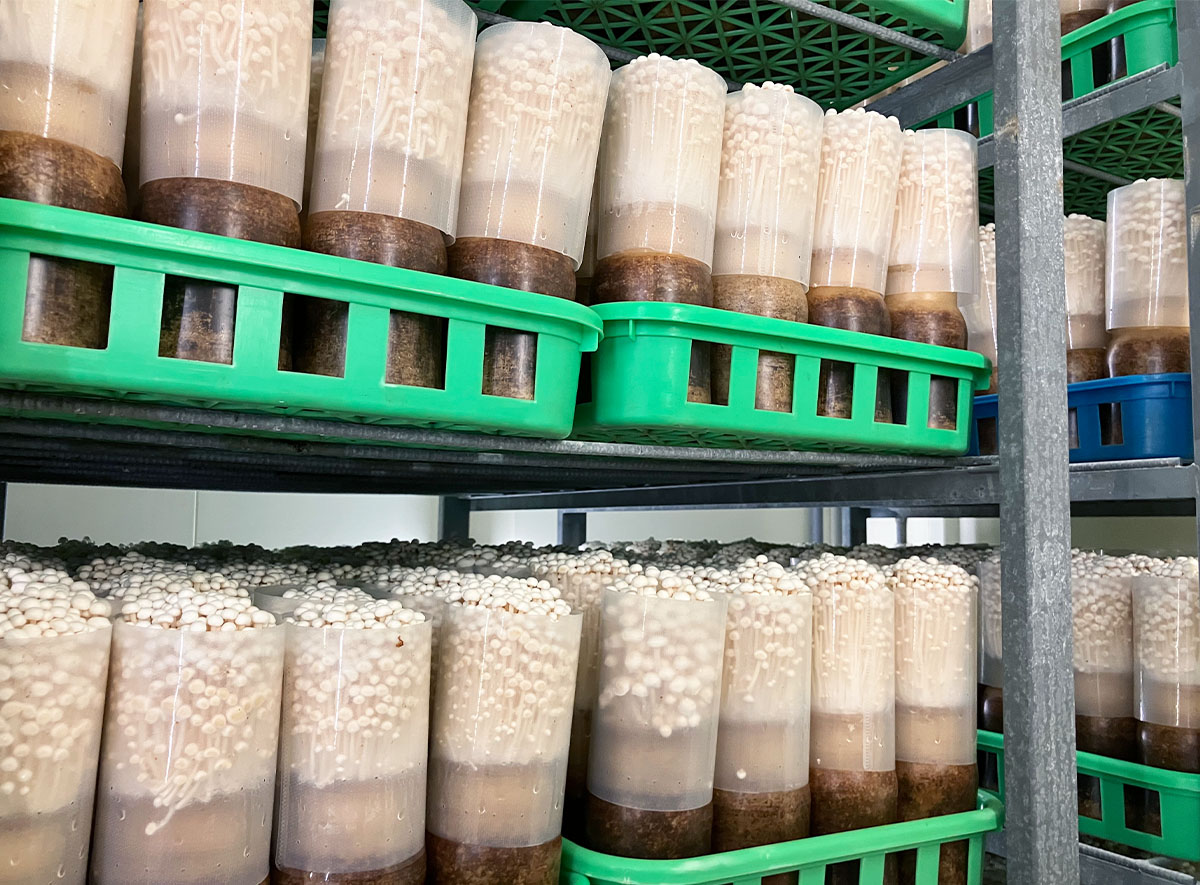
エノキ茸自体も風味を強く主張しないので、和洋中問わず幅広い食品に使える。特に大豆タンパク、日持ち向上剤が必要な中食・惣菜向けに推奨。ただ、キノコらしい風味がほしいユーザーには別途、新たに開発した国産シメジ由来の「しめじエキス」を提案している。「えのきエキス」は目下、「食肉加工メーカーを中心に評価が高い」(斉藤氏)といい、畜肉が持つ核酸系のうまみとの相乗効果が発揮されるためと推測される。
キノコ類は、ヘルシー志向が強い海外で人気が高い。農産物の輸出は、畜肉・魚肉に比べてハードルが低いことから、「日本のだし文化を発信できる原料の一つになれば」(斉藤氏)と期待している。
Mitani Sangyo Proposes “Enoki Mushroom Extract and Dashi Stock”—Delivering Both Umami and Flavor Masking and Offering a Potential Substitute for Marine-derived Ingredients【PR】
In the seasoning industry, a major challenge is finding the right balance between maximizing umami and masking unwanted flavors.
Mitani Sangyo is proposing a new food ingredient that addresses this trade-off.
The company’s “Enoki Mushroom Extract” and “Enoki Mushroom Concentrated Dashi Stock,” made from enoki mushrooms grown in Japan, can mask soybean and sour odors while still imparting the original umami flavor of enoki mushrooms.
Unlike marine-derived resources that are increasingly becoming depleted, these new products are attracting attention as a viable alternative for which stable supplies can be procured.
The company will be participating in “ifia Japan 2026” at Tokyo Big Sight from May 27 to 29.
During the event, it will provide samples that allow visitors to experience firsthand how the products achieve both umami and flavor masking effects.
A distinguishing feature of “Enoki Mushroom Extract” and “Enoki Mushroom Concentrated Dashi Stock” is the unprecedented umami of enoki mushrooms, achieved and sustained through the company’s unique manufacturing method (patent pending).
Because the products contain 18 of the 20 amino acids, they can maintain a rich umami flavor, beginning with the initial notes of glutamate all the way through to the mid-palate and aftertaste. This allows them to impart complex flavors even to plain miso soup with no added ingredients.
Another distinctive feature is their powerful flavor masking effect.
According to testing conducted by Mitani Sangyo, when 1% “Enoki Mushroom Extract” was added to unflavored soy milk, all sales prospects who tasted it reported a reduction in the soybean odor.
Existing masking agents can sometimes mask even the flavors that we wish to retain. However, according to Tomoyuki Saito (Business Development Office, Corporate Planning Division), since these products were originally intended to enhance umami, the masking effect does not dilute the umami flavors.
For example, when added to simmered pumpkin, they reduce the astringency while maintaining the umami flavor, indicating that both the masking and umami enhancement effects are achieved.
In addition, they can reduce the bitterness of vegetable juice, matcha, and hops, making them smoother and more mellow.
The enoki mushrooms used as the ingredients for these products are exclusively from Nagano Prefecture, which accounts for approximately 60% of Japan’s total enoki mushroom production volume.
The drastic decline in the harvest volume of marine resources, such as bonito and kelp, is posing a challenge in recent times. Meanwhile, enoki mushrooms, an agricultural product, offer sufficient, scalable production capacity, making them an exceptional ingredient that can be supplied in a stable manner even when sourcing from specific production areas, as Mr. Saito explains. Therefore, they can be considered a highly sustainable next-generation ingredient for making extract and stock products.
Since enoki mushrooms themselves do not have a strong flavor, they can be used in a wide range of dishes including Japanese, Western, and Chinese cuisine.
The products are especially suitable for ready-to-eat meals and prepared deli foods, which often incorporate soy protein and shelf-life extending agents.
However, for users who desire a more distinctive mushroom flavor, the company offers a newly developed “Shimeji Mushroom Extract” derived from shimeji mushrooms grown in Japan.
According to Mr. Saito, “Enoki Mushroom Extract” is currently highly regarded primarily among meat processing manufacturers, likely because it has a synergistic effect with the nucleotide-derived umami of meat.
Mushrooms are very popular overseas, especially in countries with a strong focus on healthy living.
Since there are lower barriers to exporting agricultural products than exporting meat and fish, Mr. Saito expresses the company’s hopes that mushrooms will become one of the ingredients through which Japan can promote its traditional dashi (soup stock) culture.
関連記事

